
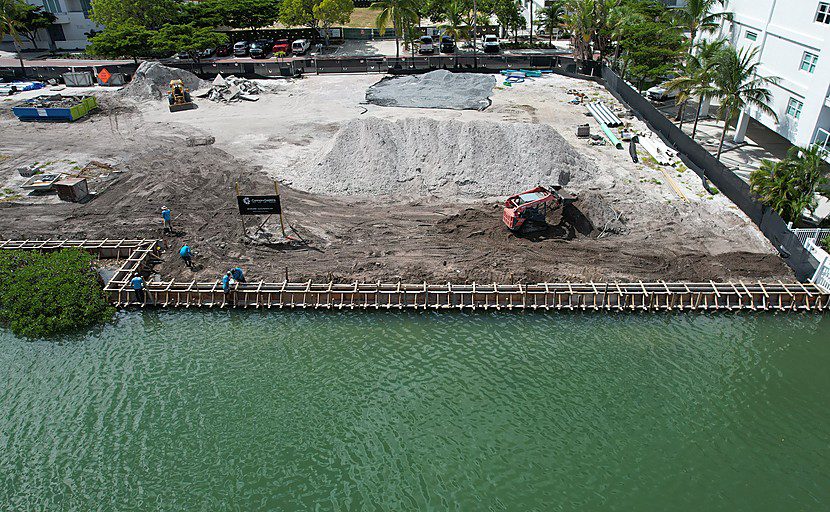
Across coastal Florida, seawall replacement is increasingly being driven by something other than storms and aging infrastructure. Changing municipal code requirements, many of them tied to flood mitigation and sea level rise planning, are now a major factor in when a seawall needs to be rebuilt and how high it has to sit when that happens.
FEMA-backed resiliency programs and updated flood standards have prompted many cities and counties to adopt higher seawall elevation requirements and stricter coastal construction standards. The result is a patchwork of local rules that can vary significantly from one jurisdiction to the next, and that may catch waterfront property owners off guard.
How current ordinances actually work
Many Florida municipalities now have ordinances that establish future seawall compliance frameworks. In most cases, homeowners are not required to replace a functional seawall immediately. Instead, the rules are structured around triggers. Major repairs, redevelopment, substantial storm damage, recurring tidal flooding, or certain permit activity can require an upgrade to current code rather than a like-for-like repair.
This is the part many owners miss. A wall that is technically functional today may still need to be raised or rebuilt sooner than expected, because a future repair project triggers a code compliance requirement that did not exist when the wall was originally built.
Where ordinances stand in major South Florida jurisdictions
The table below summarizes elevation standards across major South Florida jurisdictions, including the previous requirement (where one existed), the new required elevation, the year the amendment took effect, what activity triggers a code-compliance upgrade, and the deadline by which any phased compliance must be met. Standards continue to evolve, and any owner planning seawall work should confirm current requirements with the relevant local authority before starting design or permitting.
| Municipality | Old Standard | New Standard | Amendment | Triggers | Deadline |
|---|---|---|---|---|---|
| Broward County (regional standard) | <3 ft | 5.0 ft (4.0 until 2035) | 2020 | New build; Rebuild; Substantial repair; Flood citation | 2035 / 2050 |
| Fort Lauderdale, FL | 3.9 ft | 5.0 ft | 2023 | New build; Rebuild; >50% damage; Flood citation | 2035 / 2050 |
| Hollywood, FL | None | 5.0 ft (4.0 until 2035) | 2022 | New build; Rebuild; Substantial improvement | 2035 / 2050 |
| Pompano Beach, FL | None | 5.0 ft | 2022 | New build; Rebuild; >50% repair | 2050 |
| Dania Beach, FL | None | 5.0 ft (4.0 until 2035) | 2021 | New build; Rebuild; Substantial repair | 2035 / 2050 |
| Surfside, FL | None | 5.7 ft (4.0 design-raise) | 2023 | New build; Rebuild | None |
| Miami Beach, FL | 3.2 ft | 5.7 ft (4.0 design-raise) | 2014 / 2021 | New build; Rebuild; Flood citation | None |
| North Bay Village, FL | None | 5.94 ft | New build; Rebuild | ||
| Delray Beach, FL | <4 ft | 4.2 ft (to 5.0 future) | 2022 | New build; Rebuild | |
| City of Miami, FL | None | 6.0 ft (raise-ready 8.0) | 2020 | New build; Rebuild; Redevelopment | None |
| Hillsboro Beach, FL | <3 ft | 5.0 ft | 2021 | New build; Rebuild | 2050 |
| Oakland Park, FL | None | 5.0 ft (4.0 until 2035) | 2022 | New build; Rebuild; Flood citation | 2035 / 2050 |
Note: standards continue to evolve. Always confirm current requirements with the relevant municipal authority before starting design or permitting work. Some jurisdictions distinguish between an immediate required elevation and a higher future-compliance elevation that takes effect on a future deadline.
What triggers a required upgrade
As the table shows, the activity that triggers a code-compliance upgrade varies by jurisdiction, but a few categories appear consistently. New construction and full rebuilds almost always trigger compliance with the current elevation standard. Substantial repair, substantial improvement, and damage above a percentage threshold (often fifty percent) commonly trigger an upgrade rather than a like-for-like repair. Flood citations, where a property has been formally cited for flooding-related issues, can also trigger compliance in several South Florida jurisdictions.
Some municipalities also require seawalls to be raised or rebuilt when overtopping during high tides contributes to flooding on neighboring properties or onto public infrastructure. These triggers can apply even to walls that otherwise appear functional and well-maintained.
What this means for waterfront owners
Many waterfront property owners have heard general references to seawall elevation mandates without fully understanding how local ordinances could affect their specific property. A wall built to code in 1985 is not necessarily compliant with the code that will apply when it next needs repair. Owners planning to sell, renovate, or repair waterfront property should know what the current local requirements are, what triggers them, and what the realistic timeline and cost implications would be.
How Ultramarine Solutions can help
Ultramarine works regularly with the local municipal codes that govern seawall construction across South Florida. As part of any project, we identify which standards apply, what triggers a full code-compliance upgrade versus a simple repair, and what the realistic permitting path looks like for the work in question.
If you are a waterfront owner who wants to understand where your property stands under current local rules, contact us for an evaluation.